






What is the rainiest month in Finland?
Finland’s weather is one of the most common topics for travellers researching holiday packages to Finland. With dramatic seasonal contrasts, from frozen winter landscapes to sun-drenched summer nights, understanding when and how much it rains can make a real difference to your travel plans. Whether you are dreaming of a cosy log cabin retreat or an action-packed outdoor adventure, knowing what the Finnish climate has in store will help you choose the perfect time to visit.
This guide answers the most common questions about rainfall in Finland, including how the north differs from the south, which months tend to be the wettest, and when the weather works most in your favour. Read on for clear, practical answers that will help you plan your Finnish getaway with confidence.
How much rainfall does Finland get each year?
Finland receives a moderate amount of rainfall annually, typically between 500 and 700 millimetres across most of the country. Southern and coastal regions tend to sit at the higher end of this range, while inland and northern areas generally receive less precipitation overall. Compared to many Western European countries, Finland is not an especially rainy destination.
What makes Finnish rainfall distinctive is how it is distributed throughout the year. Rather than having concentrated wet seasons, precipitation falls fairly steadily across all twelve months. However, late summer tends to produce the highest monthly totals, driven by warmer air masses that carry more moisture. Winter precipitation frequently falls as snow rather than rain, which changes the experience on the ground considerably. For travellers planning holiday packages to Finland, this means that even the wetter months rarely bring the kind of persistent grey drizzle associated with, say, the British Isles.
What is the rainiest month in Finland?
August is generally the rainiest month in Finland. Across most of the country, August sees the highest average monthly precipitation, typically ranging from 70 to 90 millimetres depending on the region. July can also be notably wet, making midsummer the peak period for rainfall rather than autumn or spring.
The reason late summer dominates is straightforward: warmer temperatures allow the atmosphere to hold more moisture, and convective rainfall—the kind produced by warm, rising air—becomes more frequent. Thunderstorms are not uncommon in July and August, particularly in southern and central Finland. That said, Finnish summer rain tends to arrive in short, sharp bursts rather than all-day downpours. Mornings and evenings are often clear and bright, so a rainy afternoon rarely ruins an entire day of outdoor plans.
September marks the transition into autumn and can also bring significant rainfall as temperatures cool and weather systems become more unsettled. Travellers who are sensitive to rain may want to factor this into their planning if visiting in early autumn.
What is the weather like in Finland in summer?
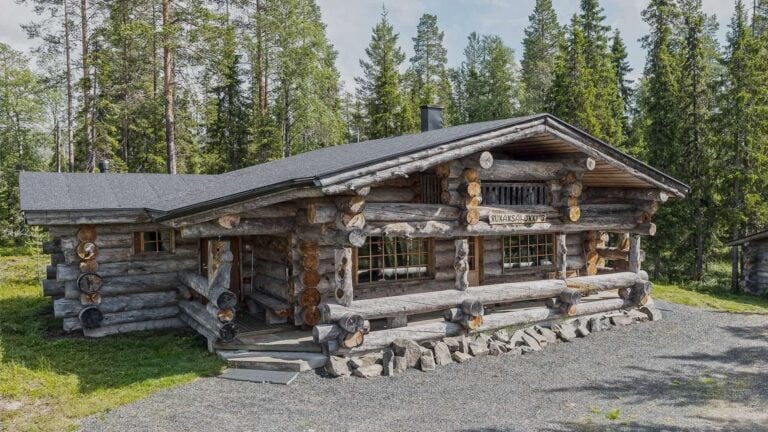
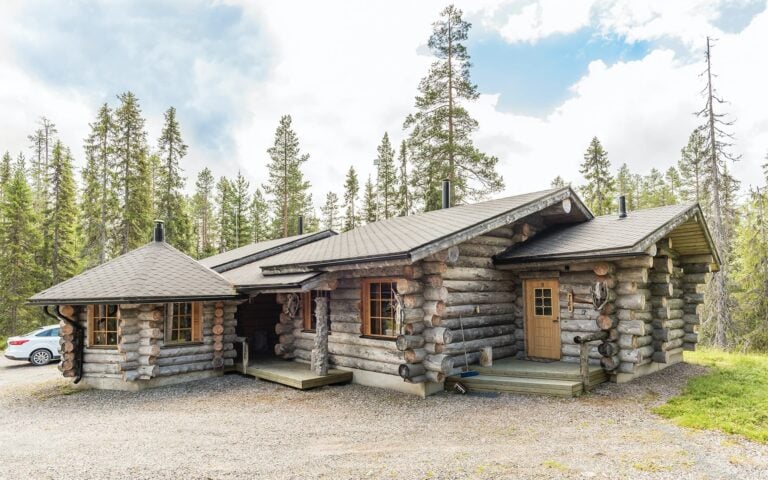
Finnish summers are warm, long, and defined by the famous midnight sun phenomenon. From June through August, temperatures in southern Finland regularly reach 20 to 25 degrees Celsius, while in the north, including the Ruka and Lapland regions, summers are cooler but still pleasantly mild, with long daylight hours stretching well into the night.
Daylight and outdoor conditions
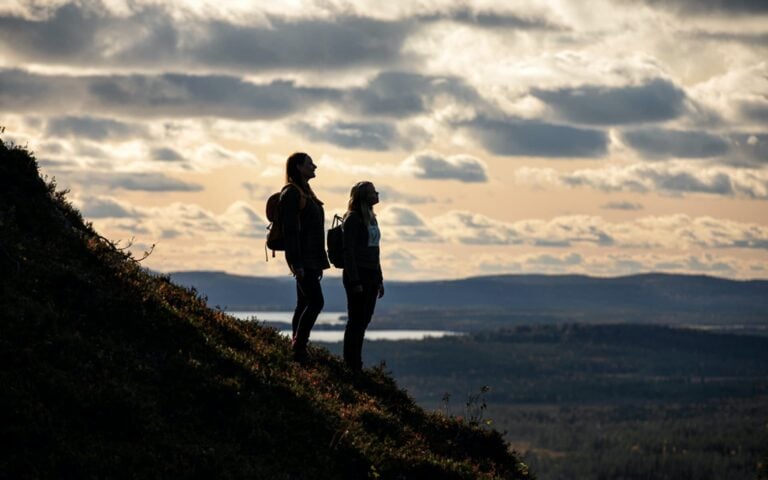
Above the Arctic Circle, the sun does not set at all for several weeks around midsummer. Even in areas like Ruka, which sits just below the Arctic Circle, nights remain extraordinarily bright throughout June and July. This creates unique conditions for outdoor activities, allowing hiking, canoeing, cycling, and fishing to continue at any hour of the day or night.
Rainfall in summer
As noted above, July and August are the wettest months, but Finnish summer rain is rarely a holiday-ruining experience. Showers tend to be brief, and the landscape responds with vivid green colours and wildflowers that make the countryside especially beautiful. Packing a light waterproof layer is wise, but you should not expect to spend your summer holiday sheltering indoors.
What is the weather like in Finland in winter?
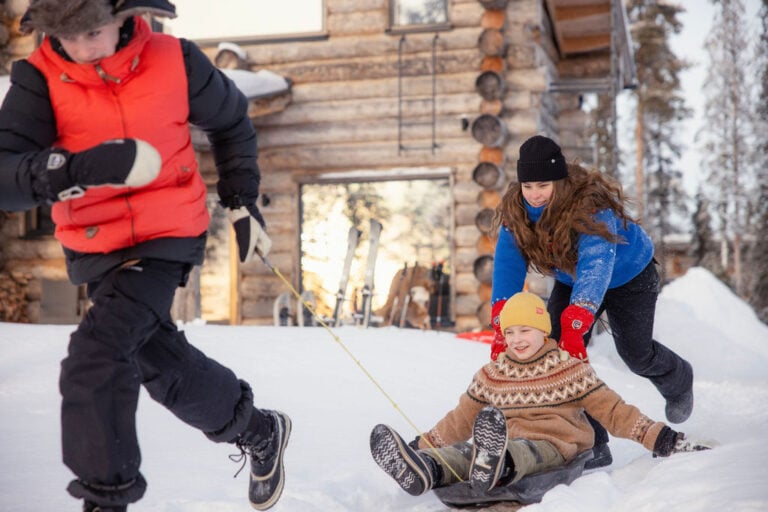
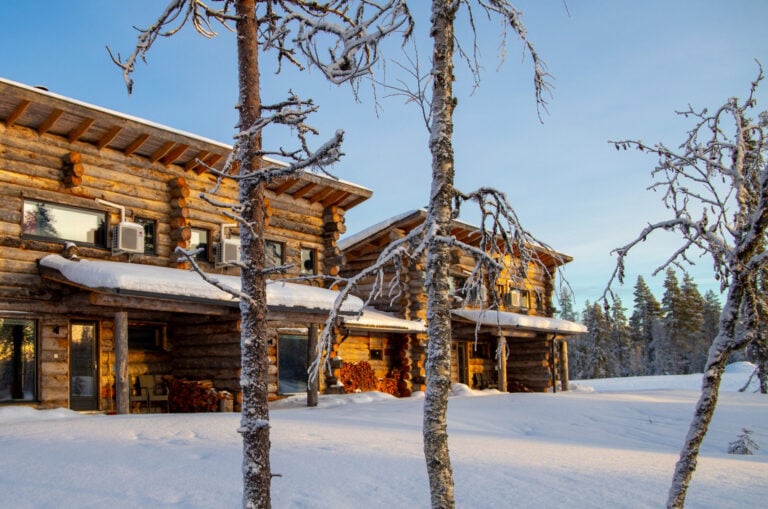
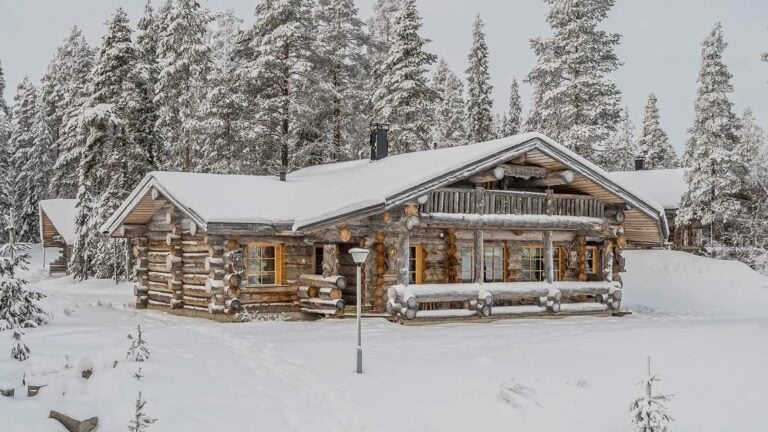
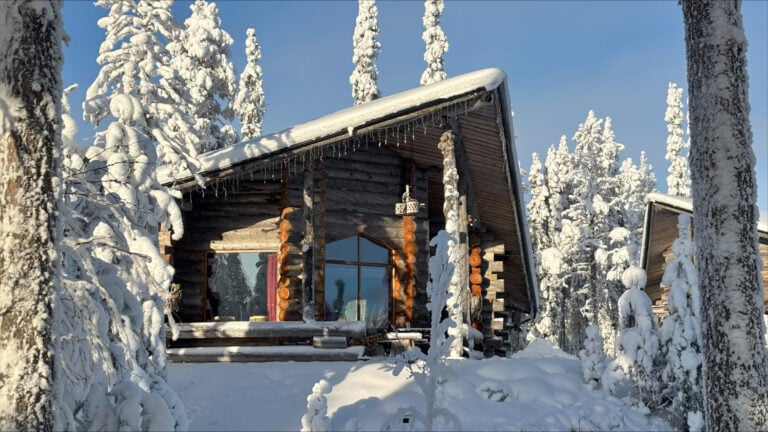
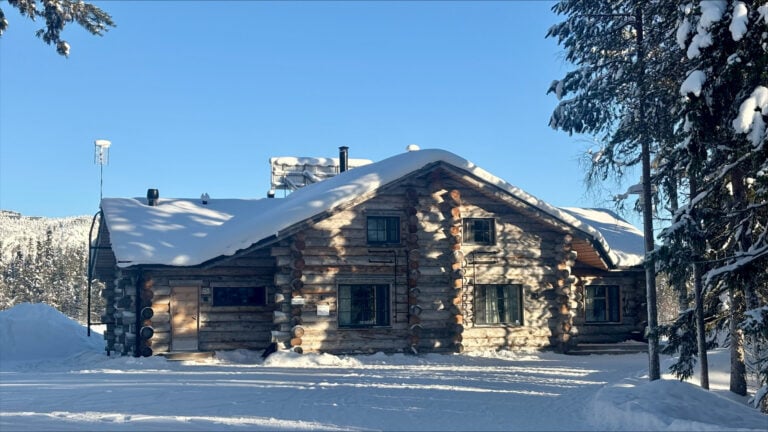
Finnish winters are cold, snowy, and magical. From December through February, temperatures across most of the country drop well below freezing, with the north experiencing the most extreme cold. In Lapland and the Ruka region, temperatures commonly fall between minus 10 and minus 25 degrees Celsius, and snow cover is reliable and deep, typically lasting from November through April.
Snow rather than rain
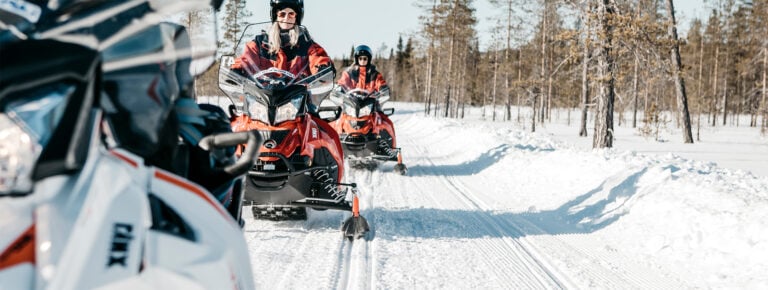
Winter precipitation in Finland falls almost entirely as snow. Rainfall in the traditional sense becomes rare once temperatures drop consistently below zero, which in northern Finland can happen as early as October. This is excellent news for winter travellers, as it means you get pristine snowscapes without the misery of cold rain. The snow transforms the landscape into a breathtaking white wilderness, perfect for activities like snowmobile safaris, snowshoeing, and cross-country skiing.
Northern lights and winter atmosphere
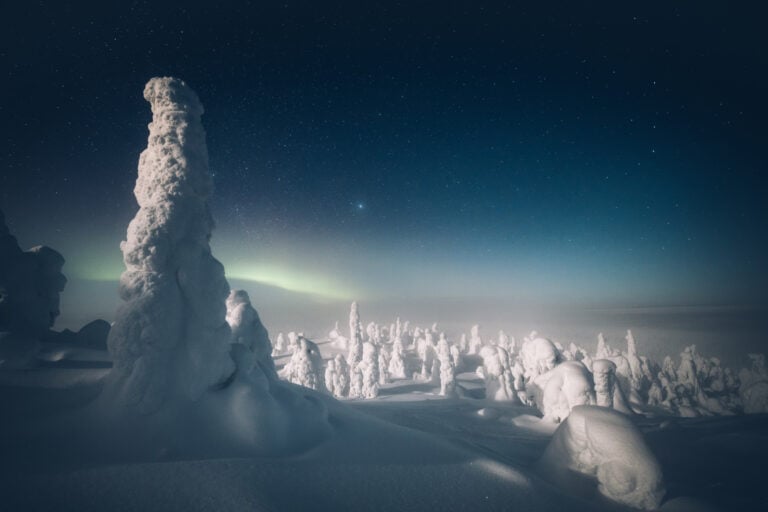
Winter in Lapland also brings the extraordinary possibility of seeing the northern lights. Clear, cold nights away from city light pollution create ideal conditions for aurora viewing. At Ruka, the combination of reliable snow, world-class ski slopes, and the chance to witness the northern lights makes winter one of the most popular seasons for international visitors seeking memorable holiday packages to Finland.
Which months are best to visit Finland to avoid rain?
The best months to visit Finland to avoid rain are February, March, April, and June. February and March offer cold, dry conditions with abundant snow in the north, making them ideal for winter activities. June brings the start of summer with relatively low rainfall before the wetter July and August period kicks in.
Here is a practical breakdown by season:
- February and March: Cold and dry with excellent snow cover. Perfect for skiing, snowmobile safaris, and northern lights viewing. Very little rainfall, as precipitation falls as snow.
- April: Snow begins to melt in the south but persists in the north. Rainfall remains relatively low, and the days grow noticeably longer.
- June: Early summer brings warmth and long days with lower rainfall than July or August. A great window for outdoor adventures before the peak wet period.
- September: Autumn colours arrive, but rainfall increases. Still manageable, and the golden foliage makes for spectacular scenery.
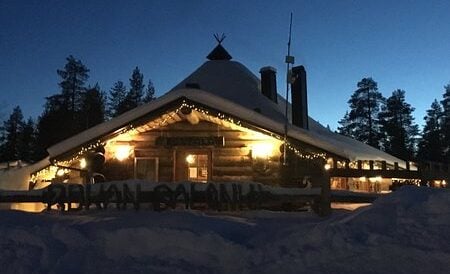
If avoiding rain entirely is your priority, a winter visit to northern Finland is your safest bet. Precipitation falls as snow rather than rain, and the dry, crisp air creates ideal conditions for outdoor exploration. We at Rukan Salonki Chalets welcome guests year-round, and our log cabin chalets provide a warm and comfortable base, whatever the season brings.
Does it rain a lot in Lapland compared to southern Finland?
Lapland actually receives less annual precipitation than southern Finland. While southern coastal areas can see 600 to 700 millimetres of precipitation per year, Lapland typically receives closer to 400 to 500 millimetres. The north is drier overall, though a greater proportion of its precipitation falls as snow during the long winter months.
This makes Lapland and the Ruka region a particularly appealing destination for those who want to experience Finnish nature without heavy rainfall. Summer showers do occur, but they tend to be brief and scattered. The continental influence on the northern climate means weather patterns are often more stable and predictable than along the southern coast, where maritime conditions can bring more persistent cloud and drizzle.
For travellers considering holiday packages to Finland focused on outdoor adventure, Lapland’s relatively dry climate, combined with its extraordinary natural scenery, makes it a compelling choice in every season. From summer hikes and canoe trips on clear lakes to winter snowshoe excursions through silent forests, the weather in this part of Finland tends to cooperate far more often than many visitors expect. At Rukan Salonki, we are perfectly placed to help you make the most of whatever the Finnish sky has to offer—rain, snow, sunshine, or the magical glow of the midnight sun.